EXHIBITION INFO
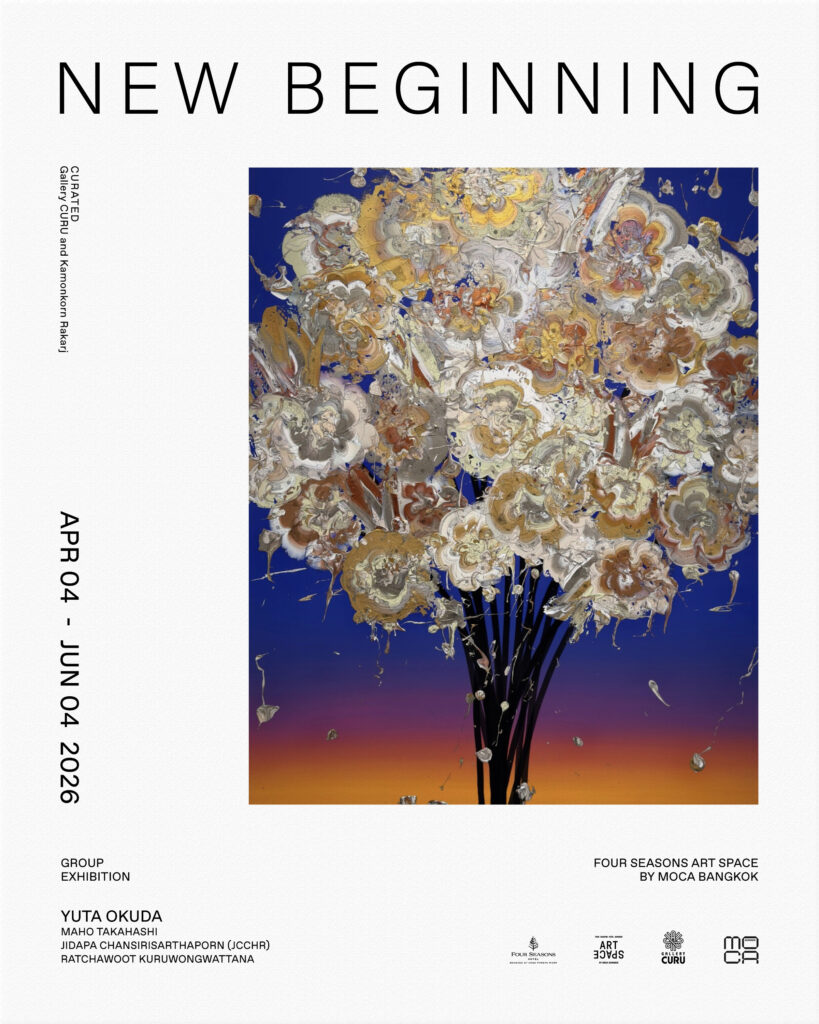
NEW BEGINNING
2026.04.04(Sat) - 06.04(THU) OPEN EVERYDAYApril marks the Thai New Year.
As a turning point in the year, people ritually cleanse the past through water and step forward into a new passage of time.
This season is both a celebration and a quiet opportunity to reflect on one’s own way of being.
“New Beginning” is an exhibition held in alignment with this moment.
Artists from Japan and Thailand, each shaped by different cultural backgrounds, present their respective expressions of what it means to begin again—sensations they have confronted while living through the uncertainty of the post-pandemic era.
Here, “New Beginning” does not refer to a dramatic improvement of circumstances, nor to the arrival of clear answers about the future.
Rather, it asks: within situations that cannot be changed, what kind of awareness can we choose to hold?
It is this internal shift—the reorientation of one’s starting point—that defines the “beginning” explored in this exhibition.
At the core of the exhibition is Yuta Okuda’s With Gratitude series, created amid the social tension and uncertainty of the COVID-19 pandemic.
As the foundations of everyday life were shaken and what had once been taken for granted—actions, relationships—suddenly disappeared, the artist began to turn his attention more sharply toward changes in his own emotions and behavior.
Even under prolonged anxiety and restriction, by consciously directing gratitude toward “what is already possible in this moment,” one’s inner stance can gently shift, and that shift can ripple outward into actions and outcomes.
This series can be understood as an attempt to visualize such an inner process.
During the same period, Okuda also faced a fundamental question: What should an artist paint now?
Rather than directly depicting social events, he came to believe that making the very “state of awareness” that sustained him during a time of confusion into the subject of his work could itself become a form of contemporaneity.
This conviction led to the creation of the series.
The floral motifs that appear throughout the works have, since childhood, symbolized a way of conveying gratitude and emotion to others.
Richly colored flowers function not as vehicles for explanation or emotional imposition, but as devices that offer viewers a quiet openness—a sensory affirmation that leaves room to breathe.
Resonating with Okuda’s perspective, works by Maho Takahashi and two Thai artists join the exhibition, together shaping the space.
Through differing viewpoints and sensibilities, each artist layers their own response to the question: What does it mean to begin?
Held at the turning point of the Thai New Year, this exhibition does not urge viewers to force change upon themselves.
If, upon leaving the space, each visitor finds within themselves a small margin—an openness to gently shift their gaze—and if their heart feels even slightly lighter, quietly oriented toward what lies ahead,
then “New Beginning” can be said to have fulfilled its role.
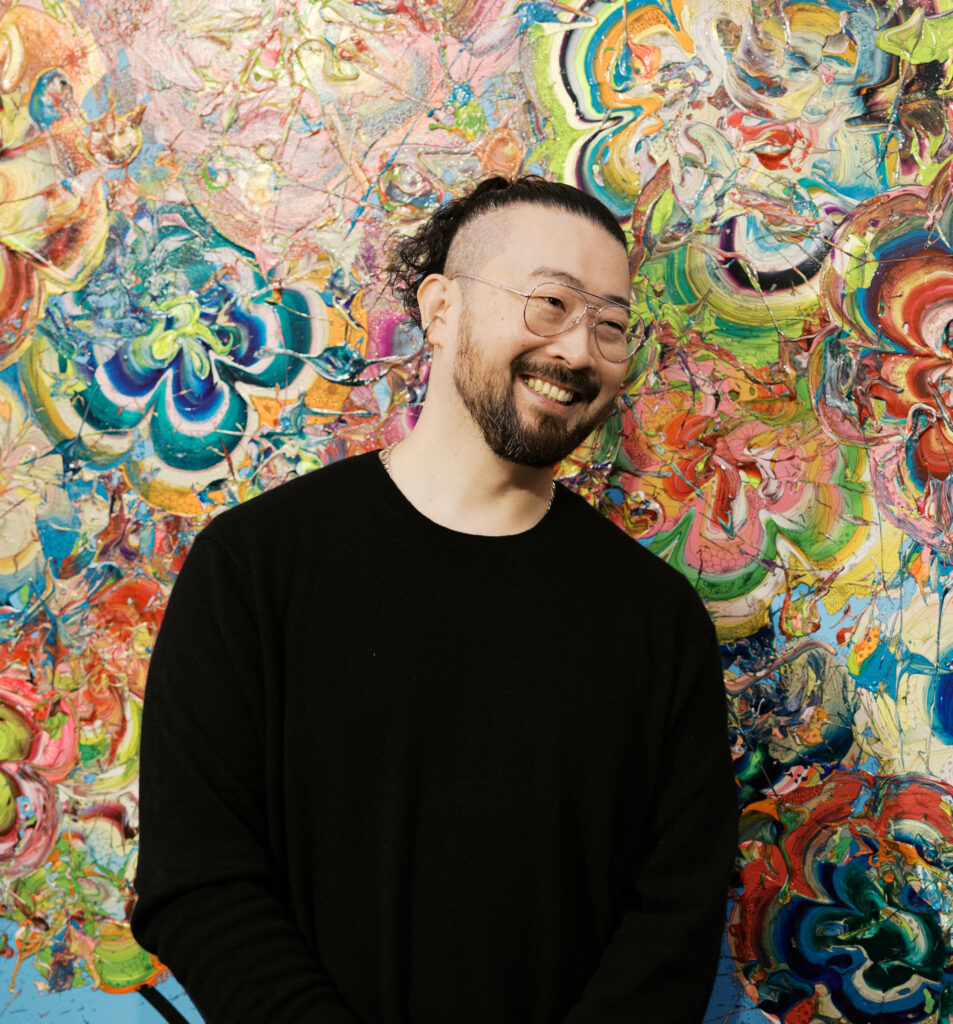
Yuta Okuda
Yuta Okuda (born in 1987 in Aichi, Japan) is a Japanese contemporary artist. After studying fashion design in Japan and the United Kingdom, he worked as a designer for a fashion brand before transitioning to a full-time art practice in 2016. Since then, he has actively participated in solo and group exhibitions throughout Japan.
In the early stages of his practice, Okuda focused on intricate drawings composed of carefully calculated lines. In recent years, his work has evolved toward painting centered on floral motifs, placing greater emphasis on intuition and chance. His works are characterized by the coexistence of bold brushstrokes and delicate pen lines, creating dynamic compositions rich in color, rhythm, and emotional depth.
Maho Takahashi
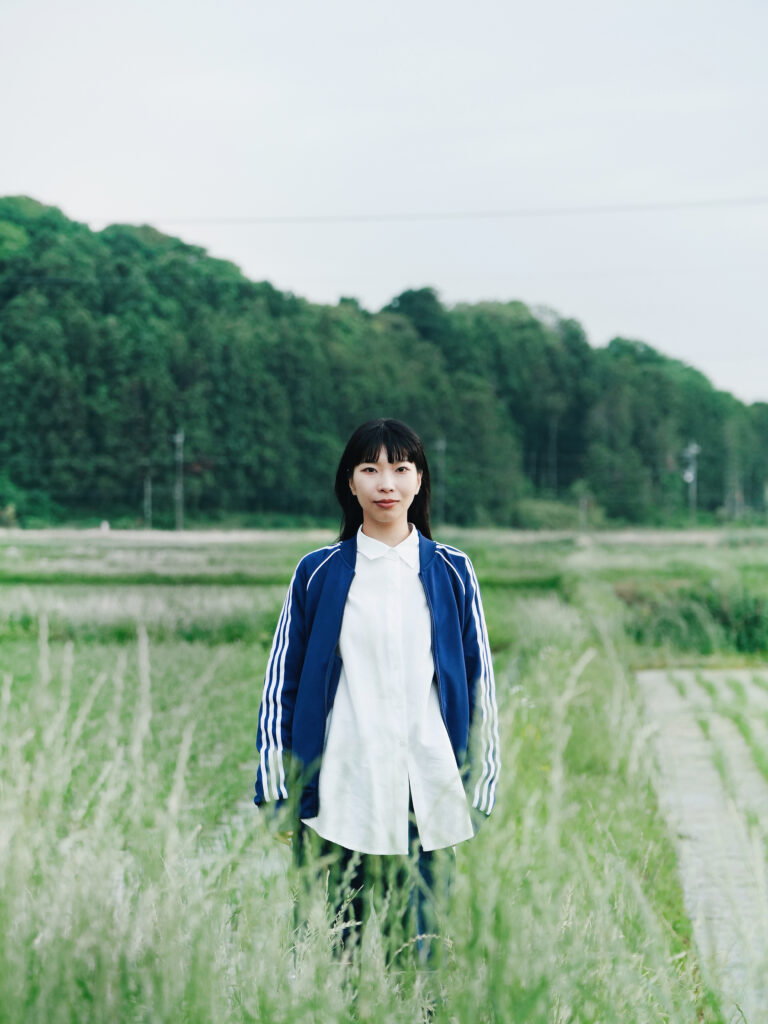
Born in the 1980s and beyond, our generation grew up as “digital natives,” with anime, manga, video
games, and the internet forming the foundation of our everyday environment. The heroes and heroines
that appeared in those worlds were powerful, straightforward, and symbolic of our aspirations and
desires.
However, the girl figure I depict, ANOKO, emerges in a way that differs from characters shaped by such
cultural codes. Stripped of excessive decoration and overt symbolism, she appears instead as a quiet,
simplified, almost anonymous presence.
Behind this lies not only my background in design but also a deep fixation on childhood itself. The origin
of my work is rooted in the experiences and memories of early childhood—an age when personality is
shaped. Innocent yet fragile, complex yet full of possibility, this state overlaps in my mind with the form
of a “pupa.” ANOKO serves as a symbolic vessel that visualizes that “transparent time before
transformation.
The neo-pop tendencies influenced by simulationism have reconstructed symbolic images while
presenting personal emotions and social contexts as new surfaces. My practice exists along this lineage,
yet distinguishes itself by treating character-like imagery not as consumable visuals, but as psychological
icons that reveal interiority. Borrowing the familiarity of character culture while simplifying its form,
ANOKO guides viewers toward the mental landscapes of memory, growth, and change.
Now, as an adult navigating the irrationalities of society, ANOKO functions as a personal sanctuary—a
quiet refuge of the heart. By refusing the form of an idealized heroine or an extension of preexisting
character culture, she transforms into a symbol of diversity itself.
To Those Who Visit
I hope viewers will feel the gentle sense of justice and the peaceful world that consistently appear in
Maho Takahashi’s works. These pieces were created as messages to those who are growing into
adulthood, to the children who will shape the future, and to the adults who continue to grow alongside
them—while also evoking the world and sensations we once knew as children but have since forgotten.
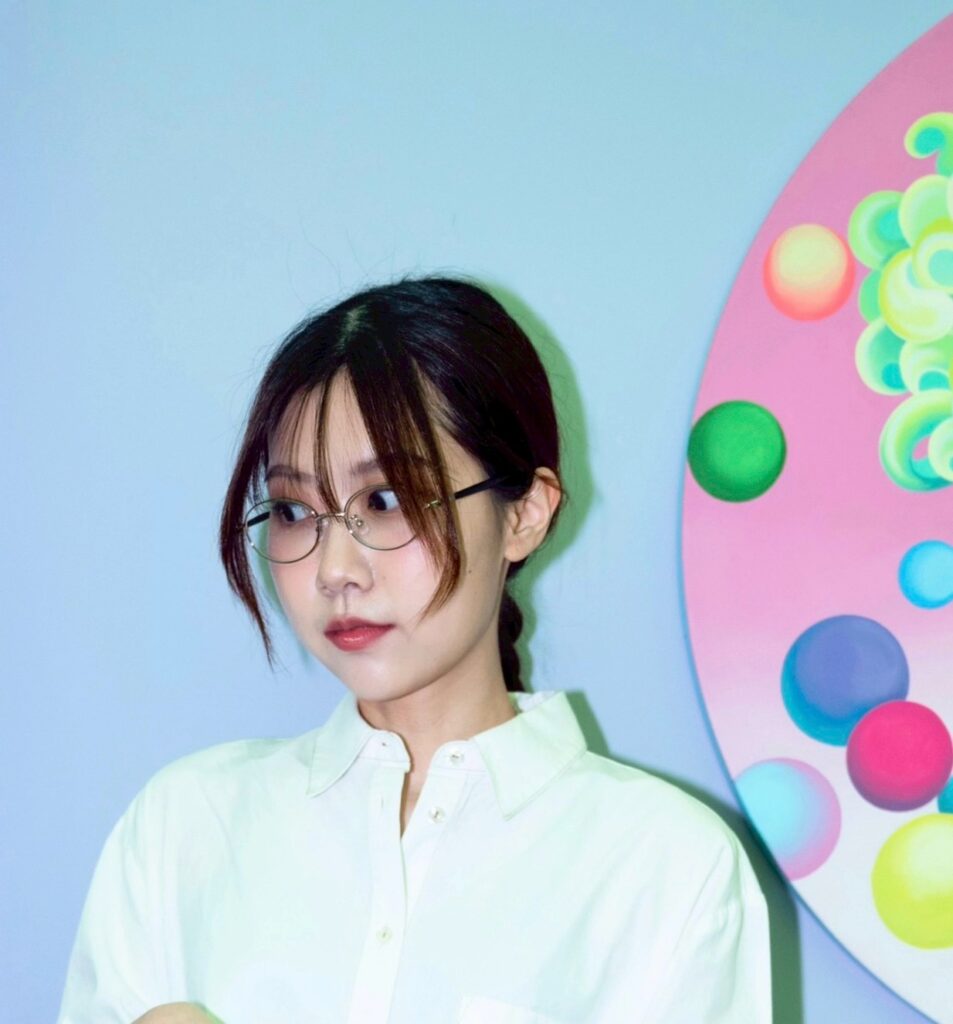
Jidapa Chansirisarthaporn (JCCHR)
Jidapa Chansirisarthaporn, also known as JCCHR, is a Thai artist whose practice explores imagination, inner emotion, and identity through surreal and fantastical visual worlds. Her works are characterized by vibrant pop colors combined with a core sense of tranquility. Using both digital and traditional techniques, JCCHR creates dreamlike imagery that exists at the intersection of fantasy and reality.
Her recurring characters—such as Kiku, Bon bon, and Love—function as alter egos, representing the artist herself within the multiverse she constructs.
Ratchawoot Kuruwongwattana
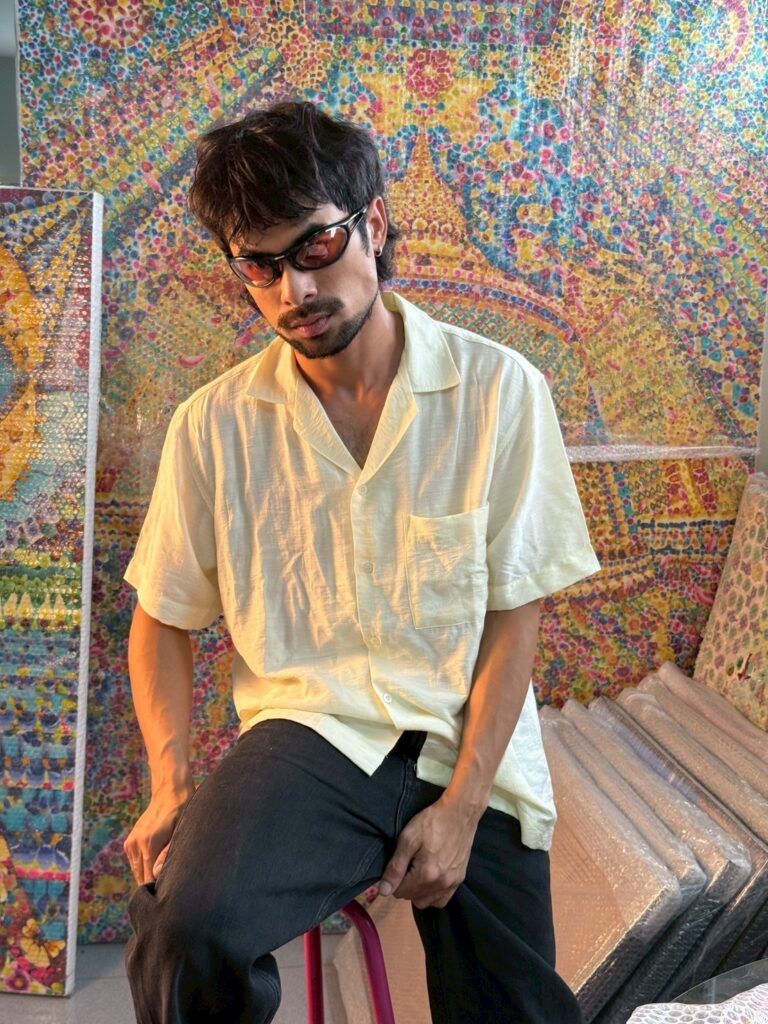
Ratchawoot Kuruwongwattana is a Thai contemporary artist whose practice examines perception, everyday experience, and the subtle boundary between reality and subjective awareness. Working primarily with painting and mixed media, he develops visual languages that respond to personal observation and lived environments. His works often reflect quiet shifts in attention—moments when familiar scenes or objects take on new meanings through changes in perspective.