EXHIBITION INFO
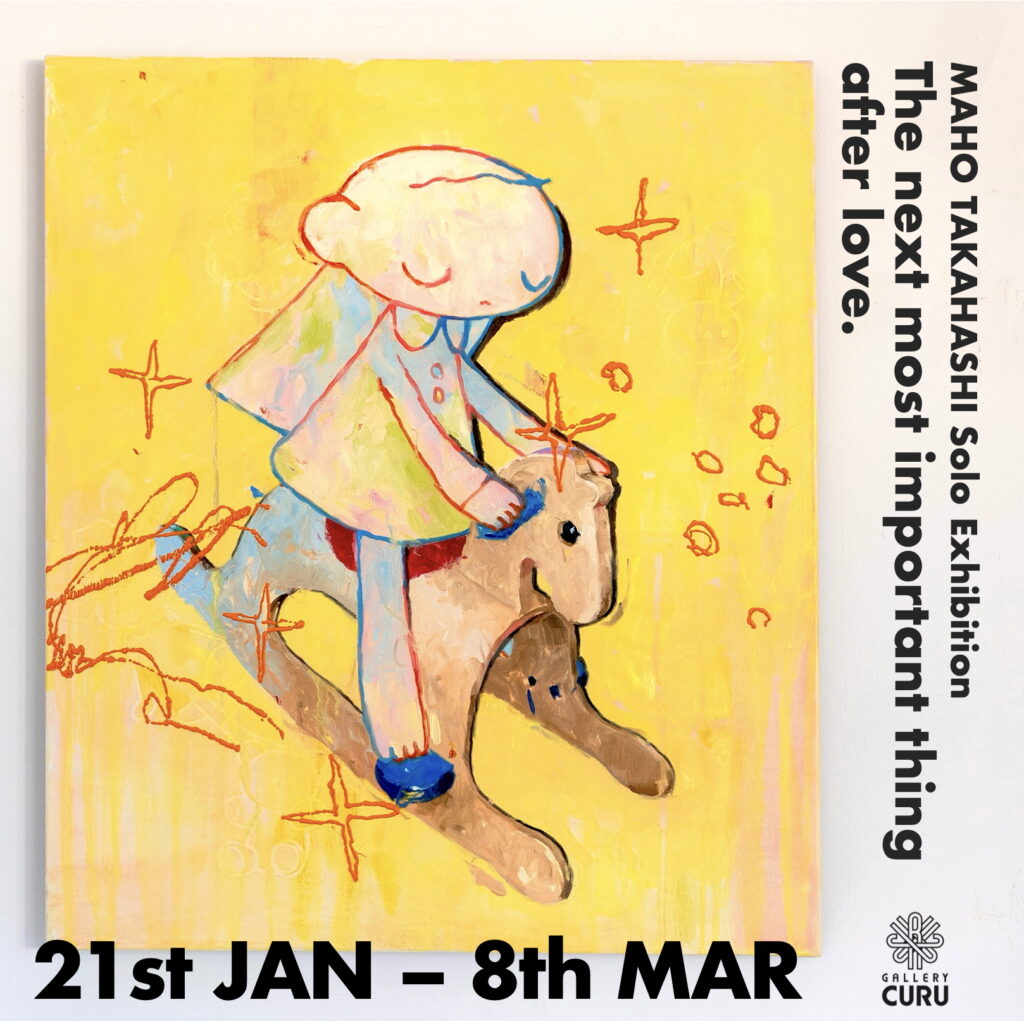
The next important thing after love.
2026.01.21(WED)-03.08(SUN) OPEN: 12:00 - 17:00CLOSED ON MONDAY AND TUESDAY
We hope that viewers can feel the gentle and peaceful world that is shared across Maho Takahashi’s works.
This exhibition was created with a message for those of us who may have forgotten the tender sense of the world that truly existed in our childhood, as well as for children who are growing into adulthood, and for the adults who continue to grow alongside them.
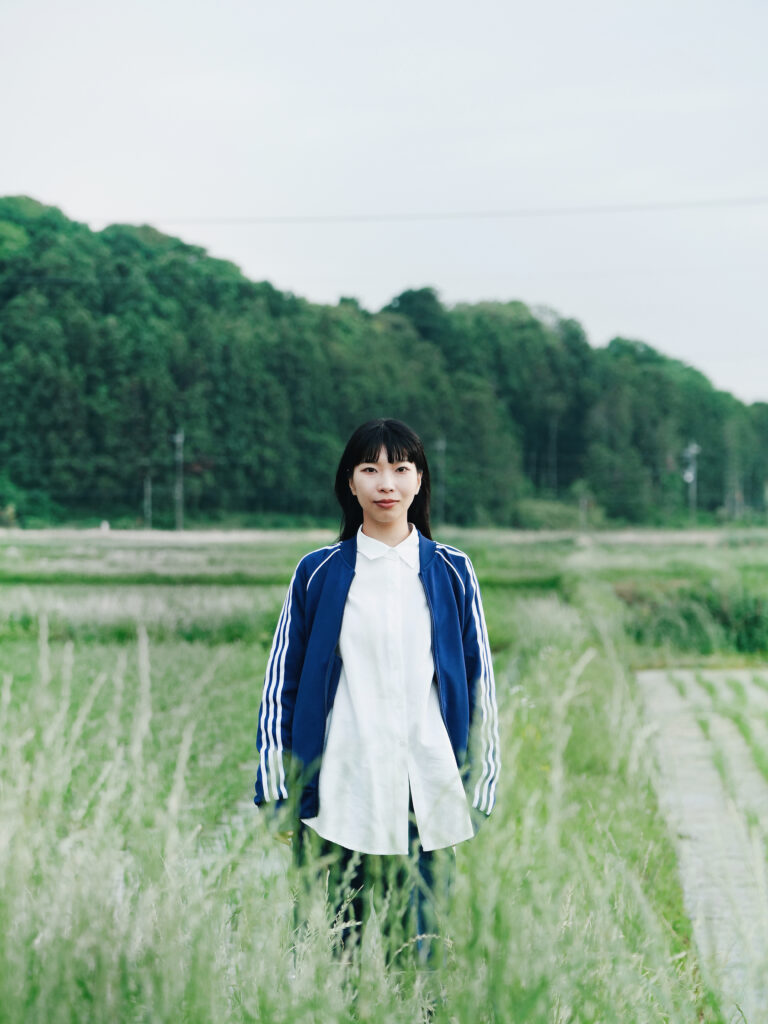
MAHO TAKAHASHI
Born in the 1980s and beyond, our generation grew up as “digital natives,” with anime, manga, video games, and the internet forming the foundation of our everyday environment. The heroes and heroines that appeared in those worlds were powerful, straightforward, and symbolic of our aspirations and desires.
However, the girl figure I depict, ANOKO, emerges in a way that differs from characters shaped by such cultural codes. Stripped of excessive decoration and overt symbolism, she appears instead as a quiet, simplified, almost anonymous presence.
Behind this lies not only my background in design but also a deep fixation on childhood itself. The origin of my work is rooted in the experiences and memories of early childhood—an age when personality is shaped. Innocent yet fragile, complex yet full of possibility, this state overlaps in my mind with the form of a “pupa.” ANOKO serves as a symbolic vessel that visualizes that “transparent time before transformation.
The neo-pop tendencies influenced by simulationism have reconstructed symbolic images while presenting personal emotions and social contexts as new surfaces. My practice exists along this lineage, yet distinguishes itself by treating character-like imagery not as consumable visuals, but as psychological icons that reveal interiority. Borrowing the familiarity of character culture while simplifying its form, ANOKO guides viewers toward the mental landscapes of memory, growth, and change.
Now, as an adult navigating the irrationalities of society, ANOKO functions as a personal sanctuary—a quiet refuge of the heart. By refusing the form of an idealized heroine or an extension of preexisting character culture, she transforms into a symbol of diversity itself.